
ADHD and Distraction: What Was I Doing? Why ADHD Is Not About Willpower
Dec 03, 2025
ADHD and Distraction: What Was I Doing? Why ADHD Is Not About Willpower
ADHD distraction isn't about lacking willpower or being lazy — it's a neurological difference in how the brain regulates attention and seeks dopamine, causing inconsistent focus that can shift from inability to concentrate on important tasks to hyperfocus on engaging activities, often within the same day.
Why ADHD-Related Distractions Are Misunderstood
How many times have you sat down to work on something important—but not urgent—only to find that five minutes later you're doing something completely unrelated? Maybe you're organizing your sock drawer, cleaning up your hard drive, or researching gluten-free vegan recipes for a cafe that only exists in your head.
If this sounds familiar, you've probably heard countless times that you're lacking the willpower to stick with important things. And over time, you've internalized that idea.
But what if distraction isn't a choice, but a neurological reality that requires a different set of tools?
I'm Peter, and I spent my first 48 years fighting my brain just like you. After being diagnosed with ADHD and working with an ADHD coach, I rebuilt my life. Now I'm an ADHD coach working specifically with men over 40.
In this post, I want to talk to you about the ways we misunderstand both ADHD and distraction—and three strategies to start flipping the script and harnessing your unique brain to stay more focused.
1. ADHD and distraction starts with the myth of willpower
Society tells us that distractibility is the result of weakness or lack of discipline. We hear it from everybody—including ourselves. But the truth is that ADHD brains are structured differently, and we have a harder time getting access to dopamine, the chemical that triggers the reward center in our brains that's needed to initiate and sustain focus.
Every person I've met with ADHD wants to be able to do things well and on time. The lack of dopamine means that often we simply cannot.
2. ADHD Is Not About a Deficit of Attention
Despite the name, ADHD is not fundamentally about a deficit of attention. It's about the ability to focus on and complete things that we're not particularly interested in.
Neurotypical people can usually do a chore when it's not interesting to them. But ADHDers struggle mightily with the same chore. Our deficit of dopamine means that a task must either be urgent or interesting to generate the motivation needed to do it.
3. The Hidden Challenge of Internal Distractions and ADHD
Most people think of distraction as external—the dog barks or the phone rings. But for ADHDers, distraction comes from inside our own brains.
If I'm starting a task that's important but doesn't interest me, my brain is like a dopamine-seeking drone looking for it anywhere else. So I scroll on Instagram for two hours or create a business plan for a mythical cafe that does feel super interesting at that point.
Three Strategies to Maximize Focus and Minimize Distractions
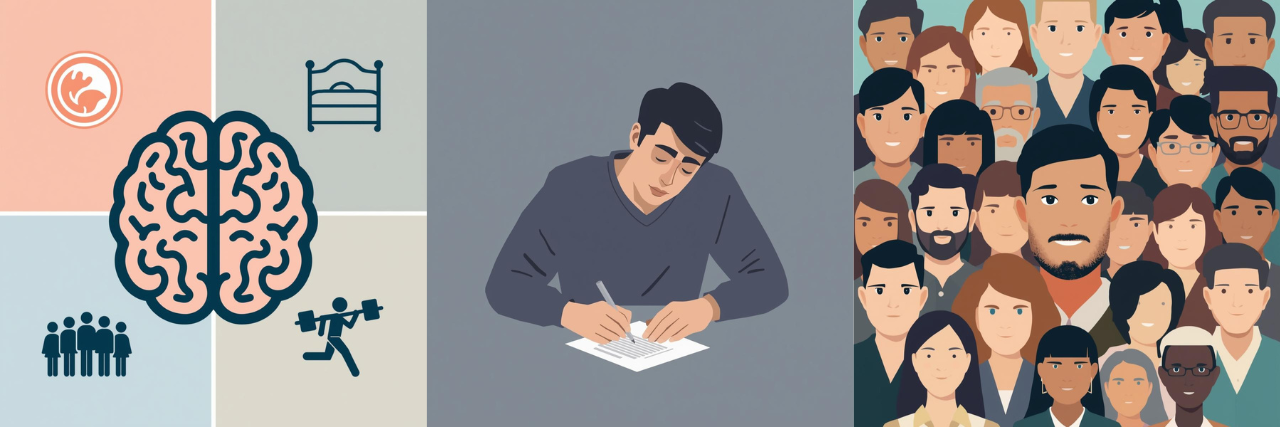
If our brains are wired differently, how can we work with them instead of against them? Here are three strategies that actually work:
Strategy #1: Invest in Your Physical Brain
Our brain requires maintenance. Science has proven that certain activities are the keys to optimizing our brain health:
- Adequate sleep
- Good nutrition
- Physical exercise
- Being outdoors
- Connecting with other people
- For many of us, taking ADHD medications
I can guess what you're thinking: "Yeah, but I have ADHD and I struggle even doing those things." I get it. You're right. And that's exactly why we need strategies that work with our brains, not against them.
This isn't about discipline—it's medicine. You're giving your brain the chemistry it needs to function. That's biology, not character.
Strategy #2: Externalize What's Happening Inside Your Brain
That dopamine-seeking drone is actually a strength. If you're like me, your brain generates ideas, connections, and possibilities at lightning speed. The problem isn't the ideas—it's that they hijack our focus at exactly the wrong time.
So instead of fighting those thoughts, capture them. When that cafe business plan pops up, write it down in a "someday maybe" list and return to your task. Use voice memos, a notes app, or even a physical notepad—whatever works for you.
The mindset shift: The goal isn't to shut down the idea generator. It's to give those ideas a place to land so they don't derail you.
Strategy #3: Make Boring Tasks More Interesting
Remember, our brains need tasks to be either urgent or interesting. If a task isn't naturally interesting, and we can't make it urgent without serious consequences, we need to find ways to inject interest into it.
Here's what I mean:
- Turn it into a game—race the clock
- Add music that energizes you
- Work somewhere different—a coffee shop or outside
- Make it social by doing it alongside someone else
- Bundle boring tasks with things you enjoy, like listening to your favorite podcast while organizing files
- Reward yourself after 25 minutes of focus with something you're excited to do
The mindset shift: Stop trying to force your brain to function like a neurotypical brain. Start getting creative about making tasks engaging enough to complete. Your brain wants to be interested, so give it something to be interested in.
Take Back Control From ADHD and Distraction
Overcoming distraction with ADHD is about working with the brain you have. Your distractibility is not a character flaw—it's a feature of an ADHD brain seeking stimulation and dopamine.
You don't need more willpower. You need strategies that work with your wiring.
if you want to see the associated video, please click here.
Let’s find one small change that could unlock focus. Book a free call here to talk about your ADHD, explore ADHD coaching, and find your next step forward.
Please stay connected.
Join our mailing list to receive helpful and actionable information on ADHD and coaching.
We hate SPAM. We will never sell your information, for any reason.